
Where I come from
Trying to be honest about my preconceptions

The other day I read an article criticizing discovery learning by a Brave Debunker™ that cited the easily debunked paper by Kirschner et al.1 I thought of writing a snarky post about it. But then I thought, people in glass houses shouldn’t throw stones. I’ve been doing a lot of debunking myself, and plan to do more on Friday. It’s very easy in this business to fall into motivated reasoning and in-group thinking, and allow your own preconceptions to blind you to the flaws of research that supports those preconceptions. So I’m going to devote this Wednesday post to describing my own preconceptions and where they came from. If one can’t change one’s beliefs, one can at least be honest about their origins and one’s resistance to changing them.
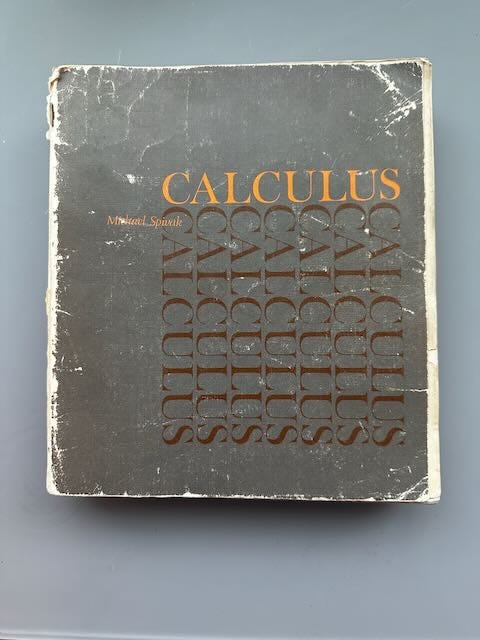
When I was a first year undergraduate at the University of New South Wales I had two brilliant lecturers in mathematics, Alf van der Poorten, who taught linear algebra, and Jack Gray, who taught calculus out of a wonderful book by Spivak. They were lively, explained the reasons behind things, and I was mesmerized. It was that experience that led me to become a mathematician. And it also led me to believe that a sufficiently clear and beautiful explanation could light up a student’s mind the way mine had been lit up. When I arrived at Harvard as a graduate student and was assigned to teach sections of calculus I wanted to do that for my students. I thought up brilliant, clear lectures that not only taught the procedures, but the conceptual foundations of those procedures.
Then I discovered something quite shattering. When students came to my office hours for help, and I started questioning them to find out where their problems were, I realized that none of my brilliant lecturing had made it into their heads. Understanding the derivative as a limit of slopes of secants had turned into a mess of algebra with no numerical backing. Students could tell me that the derivative of x² was 2x, but when I asked what that meant at x = 3 they were baffled. That set me on a journey to where I am now. Later, as an assistant professor at The University of Arizona, I was invited by Deborah Hughes Hallett to join the Harvard Calculus Consortium, and got interested in writing problems that helped the teacher see what was going on in the student’s head, and helped the student see the living concepts behind the procedures. This was the beginning of work that culminated in co-founding Illustrative Mathematics and developing a curriculum designed around a problem-based instructional model.2
I do believe there is evidence supporting that model, and I’ll be talking about that evidence in coming posts. But if I’m being honest, the reason I have a predisposition towards that model is personal: watching students solve problems helps me understand what is going on in their heads. It would be hard for me to give that up even if you gave me a mountain of evidence that just telling them how to solve the problem was better for them. Fortunately I have not found that mountain of evidence yet. And yes, the use of the word “fortunately” here reveals my preferences, even as I hope that I would overcome them should the evidence demand it.
A Brave Debunker is someone who fearlessly and rigorously questions the preconceptions of others, without looking at their own.
Maybe I’ll tell the story of that journey some day, including more about what my younger self, the one who believed in beautiful lectures, still has to teach me.
I do worry that there's a false dichotomy here. If you're comparing to lectures, then absolutely problem-based learning will win by a large margin. I'd be curious for your take on something like Rosenshine's principles: https://www.aft.org/sites/default/files/Rosenshine.pdf
(By the way, I'm not making the argument that "research shows Rosenshine's principles are great. There are plenty of flaws in the research base here. I'm trying to articulate what a serious pedagogy looks like between lecture and problem-based learning.)
If you look at the principles you will see: not very much emphasis on explanation and a large emphasis on active student participation and checking for understanding. Both of those lean more toward problem-based learning than lecture. You will also see an emphasis on providing models, guiding practice, small steps -- things that may or may not be present in problem-based learning depending on the instantiation. I think the emphasis on a high success rate is maybe the thing most different from problem-based learning?
Thanks, Bill! If you haven't heard it yet, this podcast features Steven Strogatz discussing his math teaching philosophy, I found him to be up there with best Maths teachers I've had, definitely worth a listen- https://freakonomics.com/podcast/steven-strogatz-thinks-you-dont-know-what-math-is/